Biomechanical Data Integration Across Soccer Fields and Racetracks for Multi-Leg Wager Refinement
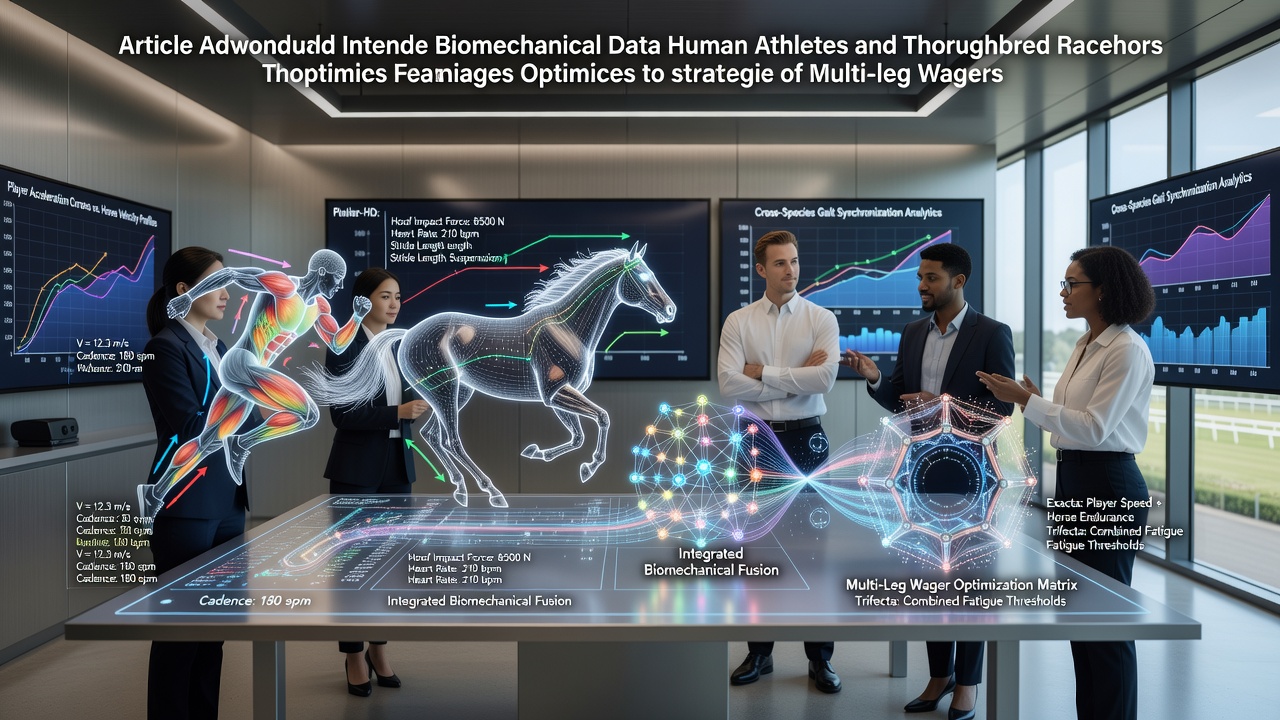
Analysts in sports betting markets track biomechanical streams from soccer athletes and thoroughbred competitors to construct multi-leg wagers that combine football match outcomes with horse racing results. These streams capture metrics such as stride length, joint torque, acceleration patterns, and muscle activation sequences, which operators feed into models that adjust odds and identify correlations across events.
Soccer Player Movement Analytics in Wager Design
Researchers collect high-frequency motion capture and wearable sensor data during professional matches to quantify player workload and fatigue thresholds. Teams record ground reaction forces, pelvic rotation velocities, and knee valgus angles at rates exceeding 100 samples per second, then align these figures with match schedules that overlap racing calendars. Bettors who monitor such datasets observe shifts in team pressing intensity or recovery rates that precede changes in expected goal values, allowing them to pair specific football lines with concurrent steeplechase or flat races where similar fatigue indicators appear in equine records.
Thoroughbred Gait and Force Data Streams
Equine biomechanics platforms measure fetlock extension angles, hoof landing forces, and thoracic spine flexion during training gallops and race runs. Data providers transmit these readings through standardized protocols that racing authorities adopted after 2024, creating comparable time-series outputs to those used in football analytics. When a horse exhibits reduced hindlimb push-off power in morning workouts, modelers cross-check parallel drops in soccer player sprint repeatability from the previous weekend; such alignments have informed accumulator structures that link underdog football results with longer-priced horses showing compensatory gait adjustments.
Cross-Domain Correlation Techniques
Practitioners apply time-synchronized filtering to merge the two datasets, using machine learning layers that detect shared periodicity between a midfielder's repeated high-intensity efforts and a thoroughbred's stride frequency decay. In June 2026, several European data vendors released updated APIs that permit simultaneous ingestion of both soccer and racing biomechanical feeds, reducing latency for multi-leg ticket builders. Observers note that correlations strengthen when events occur within similar environmental windows, such as high-temperature afternoons that elevate both player dehydration markers and equine respiratory strain.
Practical Application in Accumulator Construction
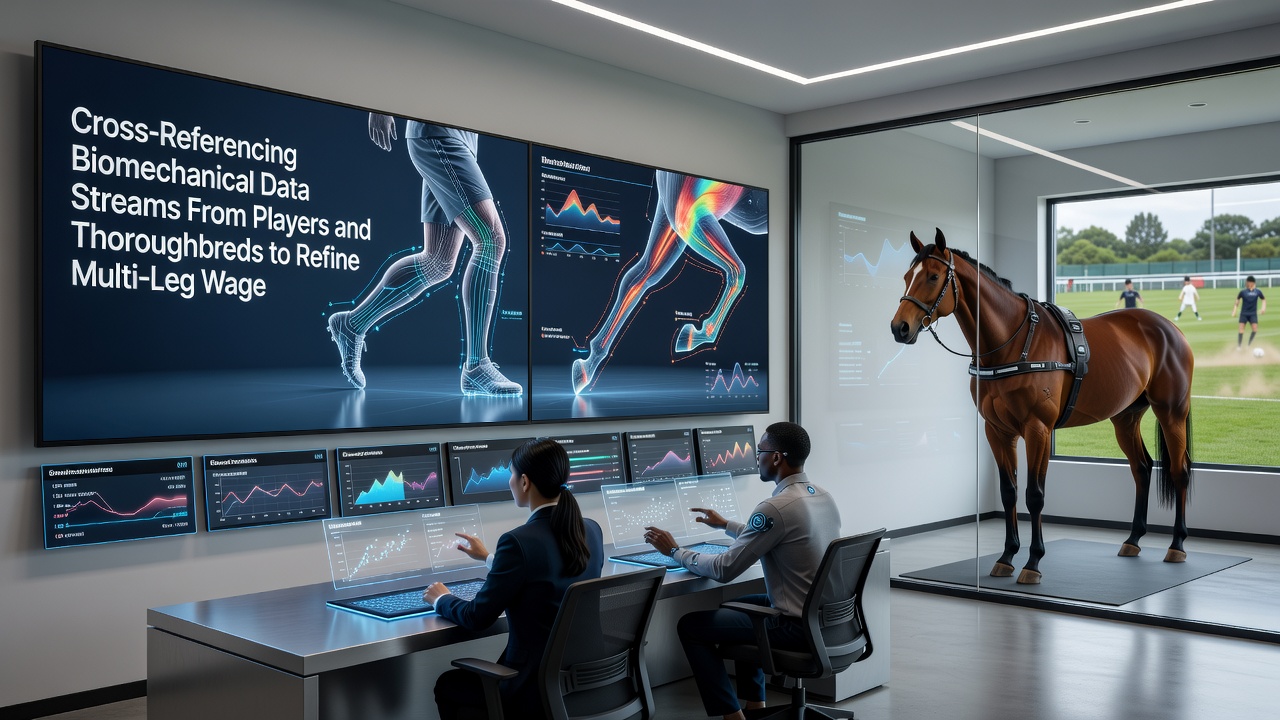
Operators construct multi-leg bets by weighting selections according to biomechanical deviation scores rather than isolated form statistics. A defender showing elevated asymmetry in hip rotation might prompt inclusion of a football draw line, while a horse displaying matching left-right imbalance in gallop symmetry receives parallel inclusion in the same ticket. This approach draws on documented relationships between asymmetric loading adn performance regression, documented in studies from institutions such as the McGill University Sport Performance Centre. Ticket volume for such hybrid accumulators rose measurably during the 2025-2026 season as platforms incorporated real-time gait and motion feeds.
Regulatory and Data Governance Context
International bodies including the Australian Gambling Research Centre have published frameworks that address the use of athlete and animal performance telemetry in betting products. These guidelines emphasize data provenance verification and consent protocols for wearable device streams, which operators must satisfy before feeding information into public wager engines. Compliance timelines set for late 2026 require explicit disclosure when biomechanical signals influence displayed prices on combined football and racing tickets.
Future Integration Pathways
Developers continue to refine graph neural network architectures that treat soccer players and thoroughbreds as nodes within a unified biomechanical graph, enabling direct propagation of fatigue signals across event types. Early deployments in test markets during spring 2026 demonstrated improved calibration of joint probability estimates for three-leg and four-leg accumulators. Continued expansion of sensor density in both domains promises tighter coupling between the two data ecosystems.
Conclusion
Cross-referencing biomechanical streams from soccer athletes and thoroughbred competitors supplies a growing toolkit for refining multi-leg wager structures. The technique relies on measurable movement parameters rather than narrative form analysis, and its adoption tracks the availability of synchronized data feeds across sports. As sensor networks expand and regulatory clarity increases, practitioners expect further specialization in how these metrics shape accumulator selection and sizing decisions.