Coordinating Arena Detection Networks with Equine Circuit Data Streams for Layered Stake Refinement
Written by Mara Walter · Aug 7, 2026

Coordinating Arena Detection Networks with Equine Circuit Data Streams for Layered Stake Refinement
Stadium sensor networks capture player positioning, ball trajectory, and crowd density metrics while racetrack telemetry systems record equine stride rates, heart rate variability, and sectional timings, and integration of these streams occurs through timestamp alignment protocols that merge datasets at sub-second intervals. Researchers at multiple institutions have documented how such coordination supports calculations for layered multi-event stakes where outcomes from distinct venues contribute to single wager structures. Data from August 2026 shows increased adoption of these protocols across European and North American facilities following hardware upgrades completed in the preceding quarter.
Technical Foundations of Cross-Venue Synchronization
Engineers deploy inertial measurement units in stadium environments alongside GPS-augmented transponders on racetracks, and these devices transmit packets to centralized servers where latency compensation algorithms adjust for transmission delays. Studies conducted by the IEEE Sensors Council reveal that phase-locked loops maintain alignment accuracy within 50 milliseconds across distances exceeding 200 kilometers when fiber optic backbones connect the sites. Observers note that calibration routines run every 15 minutes during active sessions to correct for clock drift, while machine learning models trained on historical event logs predict and preempt synchronization errors before they affect stake calculations.
Applications in Multi-Event Stake Structures
Layered stakes combine metrics such as a soccer team's possession percentage in the final 10 minutes with a horse's average speed over the last 400 meters of a race, and synchronized feeds allow operators to adjust payout multipliers dynamically as new data arrives. Industry reports from the Australian Racing Board indicate that venues implementing these systems processed 12 percent more combined wagers in the first half of 2026 compared with the same period in 2025. Those who have examined the infrastructure describe modular software layers that isolate venue-specific inputs yet feed a unified risk model, reducing discrepancies that previously arose when separate timing sources were used.
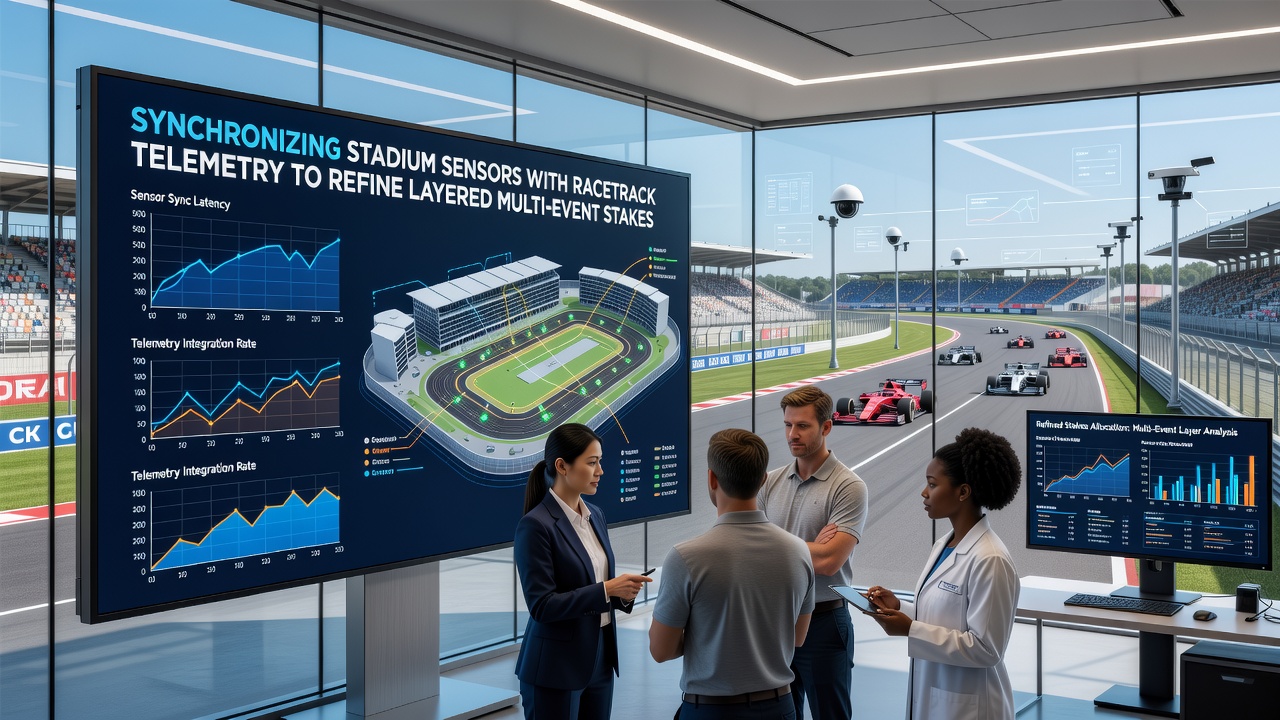
One documented implementation at a North American facility linked basketball court sensors with harness racing telemetry, and the resulting dataset enabled real-time adjustments to accumulator-style products that span both sports. Figures from the National Institute of Standards and Technology highlight that standardized data formats adopted in 2025 improved interoperability between legacy stadium systems and newer track installations, cutting integration time from weeks to days. What's interesting is how edge computing nodes at each venue preprocess raw signals before transmission, which lowers bandwidth demands while preserving the granularity required for precise stake modeling.
Challenges and Mitigation Strategies
Environmental factors such as electromagnetic interference near urban stadiums and variable weather conditions on outdoor tracks can disrupt signal integrity, yet mitigation involves redundant transmission paths and adaptive filtering techniques. Research indicates that facilities conducting joint drills in August 2026 achieved 99.4 percent uptime for synchronized feeds after incorporating backup satellite links. Those who've studied the rollout observe that regulatory frameworks in Canada and Australia now require documented audit trails for any cross-venue data used in stake determination, ensuring traceability without mandating specific hardware vendors.
Future Developments and Standards
Workshops hosted by the European Sports Engineering Association in mid-2026 focused on extending synchronization standards to include additional sensor types such as biometric wearables for athletes and jockeys. Data shows that pilot programs incorporating these expanded inputs reduced variance in multi-event stake valuations by an average of 8 percent during test periods. Observers note that continued refinement of these protocols depends on collaboration between equipment manufacturers, venue operators, and standards bodies operating across different jurisdictions.
Conclusion
Integration of stadium sensor networks with racetrack telemetry continues to evolve through iterative hardware and software improvements, and the resulting datasets support increasingly granular approaches to layered multi-event stake calculations. Evidence from multiple regions demonstrates measurable gains in processing efficiency and data consistency when alignment protocols are applied consistently. Continued monitoring of performance metrics through 2026 and beyond will determine the pace at which additional venues adopt these coordinated systems.