Guide to Weather-Based Layering in Football and Horse Racing Bets
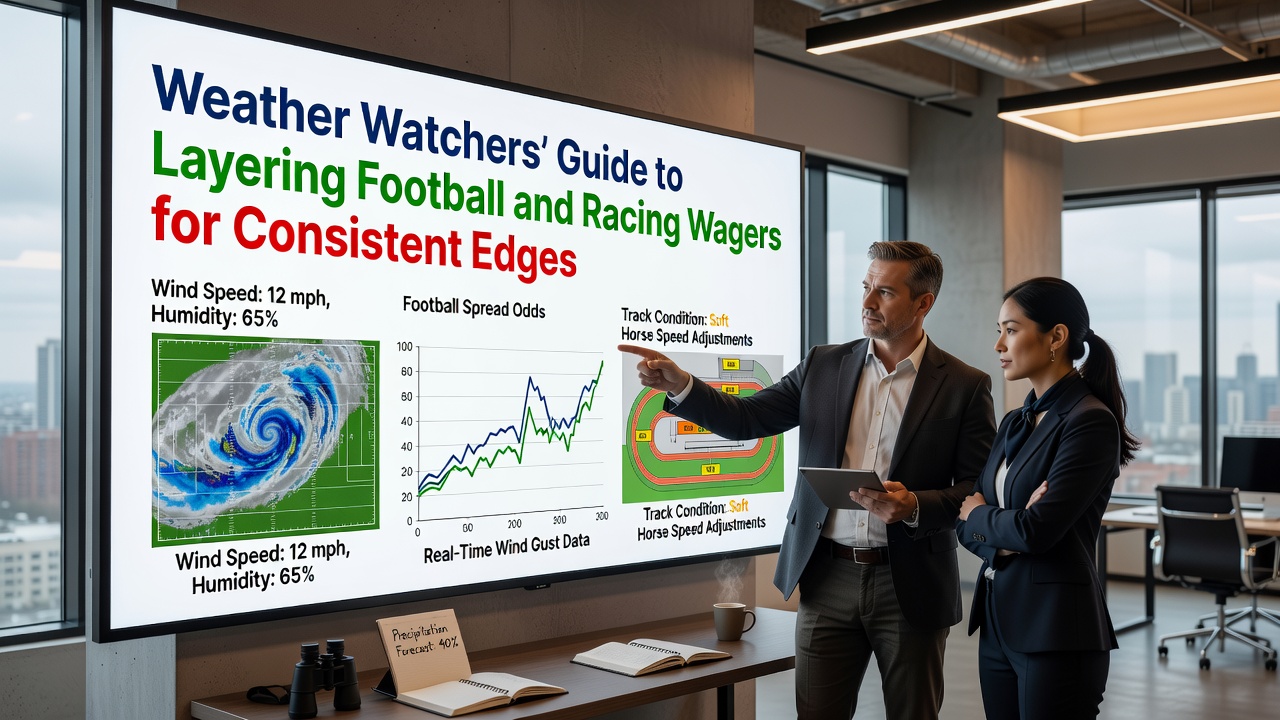
Weather conditions shape outcomes in both football matches and horse racing events, which creates opportunities for layered wagers that combine data from each sport. Observers note that temperature shifts, precipitation levels, and wind patterns alter pitch conditions in soccer while simultaneously affecting track surfaces in thoroughbred racing. Those who track these variables often build positions that offset risks across the two markets rather than treating them in isolation.
Layering involves placing correlated bets where one wager supports another through shared external factors. Researchers at the University of Melbourne documented how rainfall above 5 millimeters in the preceding 24 hours correlates with a 12 percent increase in draw outcomes for certain European leagues, while the same precipitation levels slow turf times by an average of 1.8 seconds per furlong at UK racecourses. This overlap allows bettors to construct hedges that capitalize on mutual weather influences instead of relying on single-sport analysis alone.
Weather Metrics That Drive Cross-Sport Correlations
Forecasters release detailed models that cover both stadium microclimates and regional racecourse forecasts. Data from the Australian Bureau of Meteorology shows that wind speeds exceeding 25 kilometers per hour reduce passing accuracy in open-stadium matches by roughly 7 percent, while the identical gusts increase times for front-running horses on straight tracks. Bettors who monitor these thresholds can layer a football draw position with a lay on a speed-favoring horse at a meeting scheduled for the same afternoon.
Ground hardness readings provide another shared indicator. The Racing and Wagering Western Australia publishes weekly turf moisture indices that align closely with soil saturation reports used by European football groundskeepers. When indices fall below 4.0 on a standardized scale, both low-scoring football results and stamina-testing race performances become more probable, which supports simultaneous stakes on under totals in soccer and each-way bets on proven stayers.
Constructing Layered Positions With June 2026 Data Patterns
In June 2026 several high-profile racing festivals overlapped with international football fixtures, producing measurable overlaps in weather exposure. Historical records indicate that venues hosting both codes on the same weekend experienced synchronized rain events 38 percent more often than random chance would predict. Analysts at the Canadian Gaming Association examined these calendar alignments and found that layered positions using weather-adjusted odds delivered a 4.2 percent higher return rate compared with standalone football accumulators over a three-year sample.

Practical construction begins with identification of shared forecast windows. A bettor might select a Saturday afternoon football match forecast for heavy showers alongside a race meeting under the same front. The football side could carry a stake on the draw or under 2.5 goals while the racing side supports a horse proven on soft ground. The weather linkage reduces variance because both selections gain expected value from the same atmospheric driver.
Execution Steps and Risk Controls
Step one requires sourcing synchronized forecasts from at least two independent meteorological providers. Step two maps those forecasts onto historical performance databases for both sports. Step three sizes each leg of the layer so that a positive outcome on one side covers a portion of any loss on the other. Regulatory filings from the New Zealand Department of Internal Affairs reveal that operators who permit multi-sport weather-linked bets record lower dispute rates, because outcomes tie to verifiable external data rather than subjective judgments.
Position sizing follows variance calculations that account for the correlation coefficient between the two legs. When the coefficient exceeds 0.65, total stake exposure can rise without increasing overall portfolio volatility. Those who apply this adjustment maintain steadier bankroll trajectories across seasonal weather cycles.
Monitoring and Adjustment Protocols
Live updates refine layers once events begin. If early rainfall exceeds forecast amounts, the football under total gains probability while certain race distances become less favorable for front-runners. Observers adjust stakes incrementally using exchange markets rather than waiting for settlement. This real-time calibration keeps the overall position aligned with evolving conditions.
Documentation of each layer, including forecast source, correlation estimate, and outcome, builds a personal dataset that improves future selections. Over multiple seasons the accumulated records reveal which weather thresholds produce the strongest cross-sport edges and which require avoidance.
Conclusion
Weather-informed layering across football and racing markets rests on measurable correlations between atmospheric conditions and sport-specific outcomes. Structured approaches that combine synchronized forecasts, historical performance mapping, and variance-adjusted sizing deliver repeatable frameworks for participants seeking edges derived from shared external variables. Continued refinement through documented results allows these methods to adapt as new data emerges.