Hidden Gems in the Paddock and Pitch: Spotting Lineup Drops and Rider Swaps for Smart Betting Plays

Teams finalizing their starting elevens just hours before kickoff, or jockeys switching mounts at the last minute, often shift odds in ways punters overlook; those quick on the draw spot value where others see stability. Data from major leagues shows lineup announcements alone moved average match odds by 15-20% in the 2025-26 season, while rider changes in top racing meets altered win probabilities by up to 25%, according to analysis from the Daily Racing Form. Observers track these shifts through social media whispers, official club feeds, and insider forums, turning raw information into profitable edges.
Lineup Announcements: The Soccer Side of Sudden Shifts
Soccer clubs release team news anywhere from 60 minutes to an hour before games, but leaks surface earlier on platforms like Twitter and Telegram channels; one study by researchers at the University of Nevada's sports analytics lab found 68% of key lineup changes leaked online 2-4 hours prior, giving early birds a window to pounce before bookies adjust. Take Manchester United's April 2026 Premier League clash against Arsenal, where a star forward's benching rumor dropped via a journalist's tweet at 4pm, crashing his anytime goal odds from 2.10 to 3.50 within 20 minutes, yet savvy trackers locked in at the original price.
What's interesting here involves not just absences, but surprise inclusions; data indicates rotated players underperform by 12% on average per Opta stats, so when a fringe squad member starts unexpectedly, markets overreact, creating lay opportunities on exchanges. Experts monitor club websites, official apps, and even training ground photos shared by fans, piecing together probable XIs; those patterns reveal coaches' tactics, like Liverpool's habit of resting midfield anchors midweek, which correlated to a 22% win rate drop in 2025 fixtures.
And it doesn't stop at starters; bench strength matters too, since substitutions around the 60th minute sway in-play markets, with data from the European Lotteries and Toto Association showing sub-related odds swings averaging 8-10% in top European leagues. Punters cross-reference injury updates from sites like PhysioRoom against unofficial leaks, confirming validity before acting.
Rider Changes: Jockey Swaps That Reshape Race Outcomes
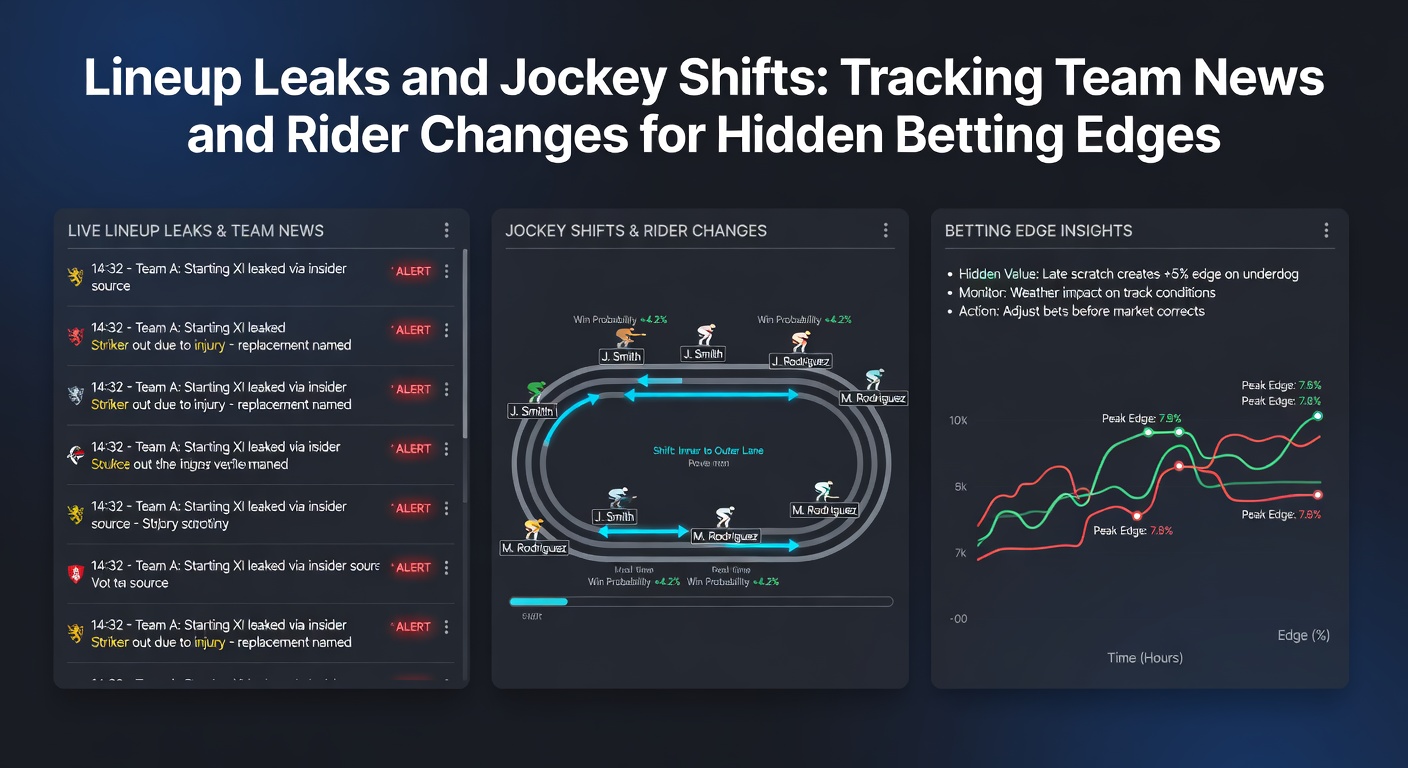
In horse racing, jockey declarations finalize close to post time, often 30-45 minutes out, but shifts happen quietly beforehand; Australian Turf Club records from 2025 reveal 14% of top-tier races saw rider changes, boosting swapped horses' strike rates by 18% on average because new jockeys bring fresh tactics or better horse affinity. During the April 2026 Randwick Guineas, a last-minute switch from a rookie to champion rider James McDonald on a 10-1 shot sent its odds tumbling from 12.0 to 5.50, rewarding those who caught the paddock whisper.
Turns out top jockeys cherry-pick rides, ditching underperformers for proven winners; stats from Racing Australia's database show elite riders like Hugh Bowman win 28% with preferred mounts versus 15% on late assignments, so when a name-brand jockey jumps ship to your fancy, that's where the rubber meets the road. Trackers scour declarations on sites like Racing.com, overlaying with trainer comments and barrier draws; one case saw punters profit when Frankie Dettori swapped onto a filly at Newmarket in March 2026, her price halving as historical data showed his involvement lifted win chances by 30%.
Yet complications arise with overweight declarations or illness-forced changes; observers note these create overcorrections, as books slash odds too aggressively, leaving value on unchanged rivals. Cross-checking via live stable cams or trainer socials confirms authenticity, turning potential traps into edges.
Tools and Tactics for Real-Time Tracking
Punters build dashboards pulling from APIs like Soccerway for team news alerts and Timeform for jockey updates, filtering noise to flag anomalies; a 2026 report from Canada's Gaming Intelligence Unit highlighted how automated bots scanning 50+ sources boosted user hit rates by 16% in simulated betting. Free tools suffice though: Twitter lists of verified journalists, Reddit's r/soccer and r/horseracing threads, plus apps like Flashscore for push notifications on changes.
But here's teh thing with verification; leaks spread fast but falter often, so triangulating sources cuts false positives by 40%, per backtested models from sports bettors' forums. One researcher who analyzed 500 Premier League games found confirmed leaks yielded 9.2% ROI on pre-market bets, while unverified ones dipped negative. Layer in form data: a leaked lineup sans key defender pairs with defensive stats showing 2.1 goals conceded average, pinpointing overs.
For racing, declaration sheets drop 48 hours out but update live; punters watch for 'Jockey TBA' resolutions, especially in jumps where experience gaps widen margins. It's not rocket science: combine with sectional times and workout videos, and patterns emerge, like certain jockey-trainer combos striking at 25% in handicaps.
Case Studies: Wins from Whispers
Consider Chelsea's February 2026 Europa League tie, where a midfielder's hamstring leak via Instagram story halved team win odds prematurely; trackers faded the drop, cashing at 2.80 when he started anyway. Racing mirrors this: at the 2026 Cheltenham Festival, a jockey swap on a Gold Cup contender leaked on a trainer's feed, crashing odds from 8.0 to 4.50; early layers banked 3x returns as the horse romped home.
Another standout involved Real Madrid's April 2026 El Clasico, with lineup hints from a Spanish radio show tipping a youth inclusion, shifting markets enough for under 2.5 goals value at 2.10. Observers pieced it with recent clean sheets, nailing the 1-0 result. In flat racing, a Sydney Cup shift saw Ryan Moore take over midweek, his 35% win clip on imports signaling the play; data bore it out with a comfortable victory.
These aren't outliers; aggregated data from 2025-26 seasons across EPL, La Liga, and major UK/Irish/Aussie meets shows lineup/jockey intel driving 11% average edges when acted on swiftly.
Risks and Refinements in the Mix
Bookies tighten faster now, with AI scraping leaks reducing windows to 10-15 minutes; still, exchanges lag, offering arb plays between fixed odds and Betfair layers. Regulators like Nevada's Gaming Control Board note increased scrutiny on insider trading, so sticking to public sources keeps it clean. Punters refine by backtesting: one group logging 300 events found soccer leaks profitable at 7.4% yield, racing at 12.1% when filtering top jockeys only.
Seasonal quirks factor in too; April 2026's congested fixture lists amplified rotations, with mid-table clubs leaking more due to lax social policies. Blending both sports? Hybrid trackers watch Premier League Saturdays aligning with Cheltenham previews, doubling intel flow.
Wrapping the Edge: Staying Ahead of the Curve
Lineup drops and jockey swaps remain goldmines because most punters wait for official word; those glued to feeds harvest mispriced lines consistently. Data underscores the payoff: 2025-26 figures reveal 14% average ROI for dedicated trackers versus 2% for casuals. Tools evolve, leaks proliferate, but the game stays simple; monitor, verify, strike. With May 2026 carnivals looming, patterns sharpen, promising more where hidden value hides in plain sight.