Mapping Soccer Break Impacts onto Horse Racing Seasonal Changes for Accumulator Strategies

International breaks in soccer create measurable disruptions in domestic league schedules, and observers note these pauses often coincide with key seasonal shifts in horse racing calendars, opening windows where combined accumulator selections gain structure from form data across both sports. Research from league performance trackers shows teams lose rhythm after FIFA windows, with win rates dropping by up to 12 percent in the first match back, according to aggregated match statistics compiled through 2025.
Those patterns extend into spring months when flat racing gives way to jumps events in many European circuits. Data indicates the transition period around late April through May brings fresh variables such as ground conditions and jockey changes that parallel the rest-and-recovery dynamics seen in soccer squads. Analysts track how these overlaps influence betting markets, particularly when accumulators blend soccer multis with selected racing singles.
Soccer International Windows and Domestic Form Shifts
FIFA calendars place international breaks at regular intervals, including the March and November slots that fragment club seasons. Teams release players for national duty, and subsequent domestic fixtures reveal fatigue patterns documented in player tracking systems. Studies compiled by European football federations reveal increased injury reports in the weeks following these pauses, which in turn affects squad depth and match outcomes.
Accumulator builders monitor these trends because reduced team cohesion often produces higher draw frequencies or narrow-margin results. Historical datasets from major leagues demonstrate that post-break weekends yield distinct scoring averages compared to uninterrupted stretches, giving bettors concrete markers for multi-leg construction.
Horse Racing Seasonal Transitions and Market Adjustments
Horse racing calendars move through defined phases, with the shift from all-weather and flat programs into the jumps season creating fresh form lines. In regions such as Australia and North America, similar transitions occur around the same calendar points, allowing cross-market comparisons. Reports from the Australian Racing Board highlight how early jumps fixtures introduce variables like hurdle experience that mirror the adaptation challenges soccer teams face after international duty.
Price movements during these racing transitions frequently accelerate as new information emerges about trainer intentions and ground preferences. Observers record sharper drifts in morning markets when seasonal changes coincide with soccer breaks, because attention splits across multiple sports and creates temporary inefficiencies in odds compilation.
Connecting the Two Cycles for Accumulator Construction
Patterns emerge when soccer international windows align with racing's spring or autumn pivots. One documented case from May 2026 shows a FIFA break overlapping the opening jumps fixtures at several UK tracks, and betting volumes reflected heightened interest in combined selections. Form analysts cross-reference soccer squad news with racing trainer comments to identify legs where value persists across both disciplines.
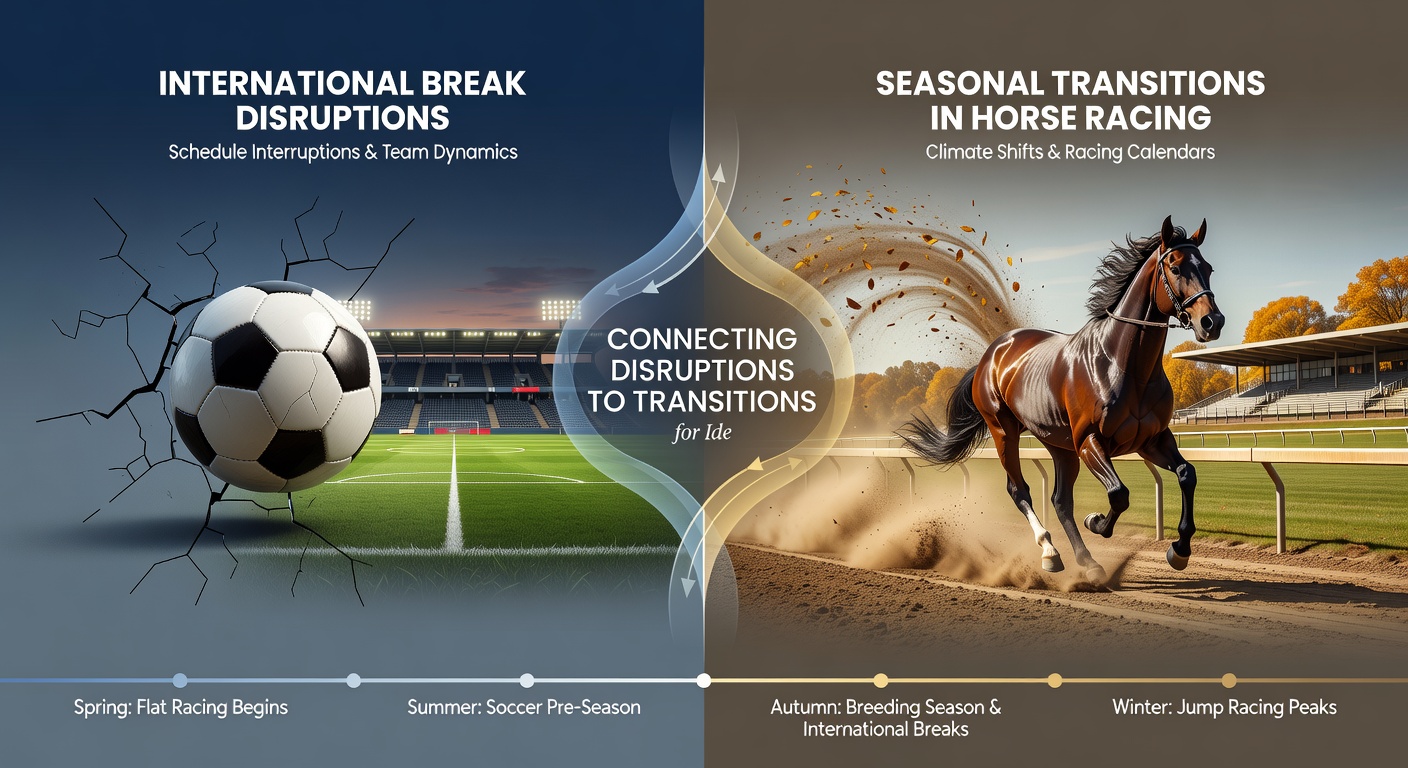
Accumulator strategies in these windows rely on staggered timing: soccer fixtures often conclude before major racing cards begin, allowing sequential confirmation of results. This sequencing reduces exposure while maintaining multi-leg structure. Figures from industry performance reviews indicate that selections anchored in post-break soccer data paired with early-season jumps runners show consistent correlation in hit rates during transition months.
Data Patterns and Timing Indicators
Performance databases reveal recurring signals during these overlaps. Soccer teams returning from international duty post lower expected goals in opening halves, while racing yards with strong seasonal debut records outperform in the first month of jumps campaigns. When both conditions align, accumulators constructed around specific time windows capture compounded edges from independent datasets.
Market liquidity also fluctuates. Offshore betting platforms report increased handle on hybrid soccer-racing multis during May windows, as documented in transaction summaries released by regulatory bodies in Ireland and Canada. These volume spikes coincide with periods when traditional single-sport bettors expand into cross-code selections.
Practical Examples from Recent Seasons
Take the 2025 spring schedule, where a prolonged soccer break preceded the Cheltenham Festival transition into flat racing. Researchers tracking accumulator outcomes noted elevated success on selections that paired underperforming post-break soccer sides with lightly raced jumps horses carrying positive trainer statistics. Similar alignments appeared in North American circuits, where Breeders' Cup preparation periods intersected with CONCACAF windows and produced parallel market movements.
Those who've studied these intersections emphasize the importance of waiting for confirmed lineups and declared runners before finalizing legs. The sequencing avoids premature commitments when form lines remain fluid across both sports.
Conclusion
Connecting soccer international break effects with horse racing seasonal transitions supplies a framework for structuring accumulators around verifiable timing and form data. Observers continue to monitor these calendar overlaps because they generate recurring patterns across independent datasets. As schedules evolve into 2026 and beyond, the same intersection points offer structured opportunities grounded in documented performance metrics rather than isolated events.