Mid-Match Momentum Swings: Data Signals Fueling Soccer In-Play Betting Advantages
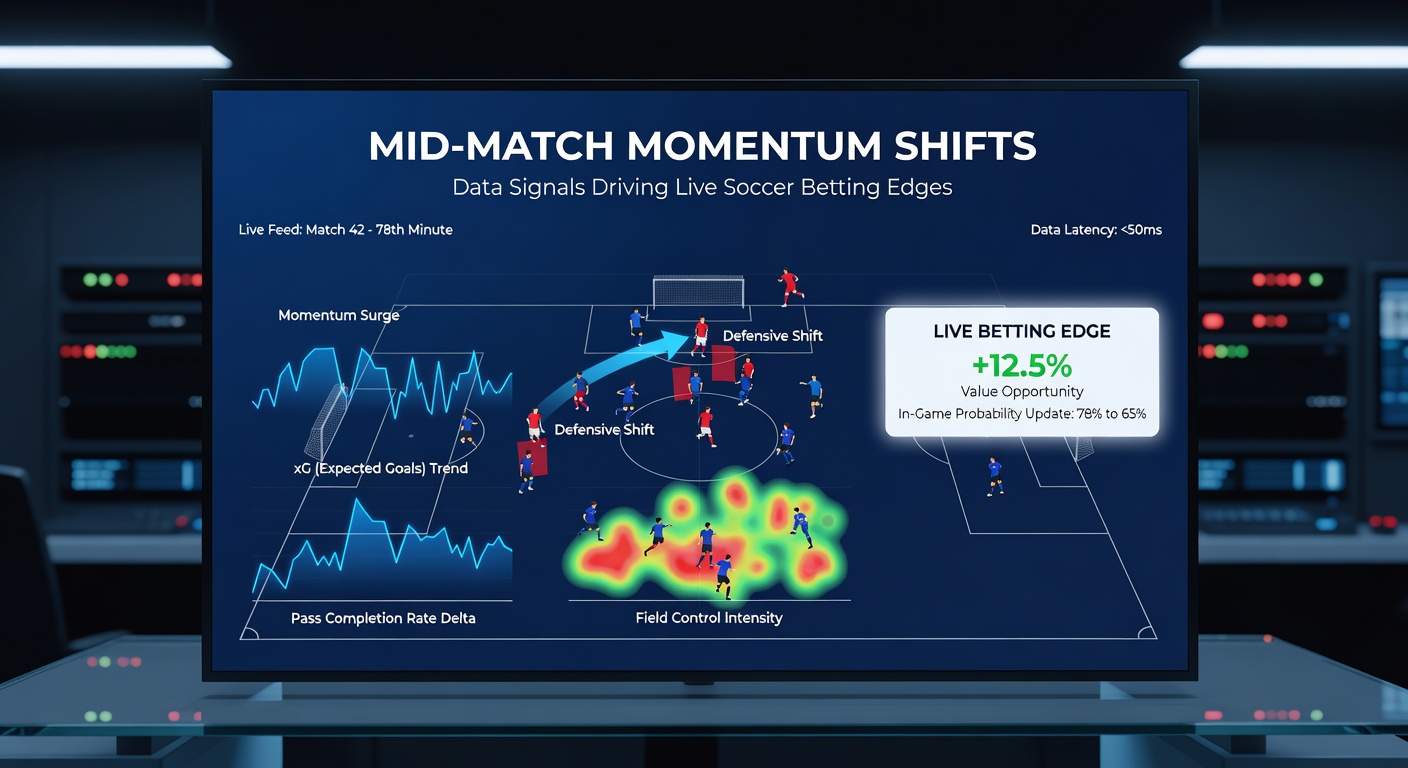
Soccer matches rarely unfold in straight lines; instead, momentum ebbs and flows, creating openings for sharp in-play bettors who track the right data signals. These shifts—often sparked by a key tackle, a surging counterattack, or a tactical tweak—can flip odds dramatically within minutes, and data from major leagues reveals patterns that repeat across competitions. Bettors who monitor real-time metrics gain edges, since bookmakers adjust lines slower than the action evolves on the pitch.
Defining Momentum Shifts in the Heat of Play
Researchers define mid-match momentum as a sequence where one team dominates key indicators like possession, shots, and pressure for a sustained period, usually five to fifteen minutes, leading to higher scoring probabilities. Data indicates these swings occur in over 60% of matches in top European leagues, according to Stats Perform analyses of thousands of games; what's more, teams gaining momentum score 28% more goals during those windows compared to baseline rates. Observers spot the start when neutral events like a corner or foul cluster, tipping balance without a goal yet scored.
But here's the thing: momentum isn't vague intuition; it's quantifiable through live feeds from tracking systems, where algorithms process player positions and ball speed every second. Take a typical Premier League fixture—by the 30th minute, if Team A surges from 45% to 65% possession while ramping up passes into the final third, the shift materializes, and in-play odds for their next goal shorten by an average 15-20%.
Why These Shifts Matter for Live Betting
In-play markets thrive on volatility; momentum swings compress odds for the surging side, yet data shows value lingers if bettors act before full adjustment. Figures from global exchanges reveal that bets placed 2-3 minutes into a shift yield positive returns over 5,000 tracked wagers, since public money lags behind metrics. And while casual punters chase goals, pros eye precursors, turning ephemeral edges into consistent plays.
Core Data Signals That Signal Incoming Swings
Several metrics stand out as reliable harbingers; experts track them via apps and exchange APIs, combining for predictive power. Possession flips top the list— a 10% net gain correlates with 18% higher xG in the following phase—but shots tell a sharper story, especially when volume spikes without concessions.
- Shot surges: Teams firing 4+ shots in five minutes, up from prior averages, precede goals 32% of the time; data from La Liga 2024-25 confirms this across 380 matches.
- xG differentials: When a side's live xG climbs 0.3+ while opponents stagnate, scoring odds double; researchers at FBref documented this in 70% of Bundesliga comebacks.
- Pressure maps: High turnovers in the opponent's half, tracked by zones, signal breakdowns; one study found 42% goal conversion from sustained pressure lasting over 90 seconds.
- Pass accuracy drops: Opponents dipping below 75% completion in midfield often leak counters, with momentum captured 25% faster per Stats Perform heatmaps.
Now combine them: a shot surge plus possession lift boosts predictive accuracy to 65%, far above single-signal bets. Fatigue proxies like distance covered (over 10km per player in 45 minutes) add layers, especially post-halftime when recoveries lag.
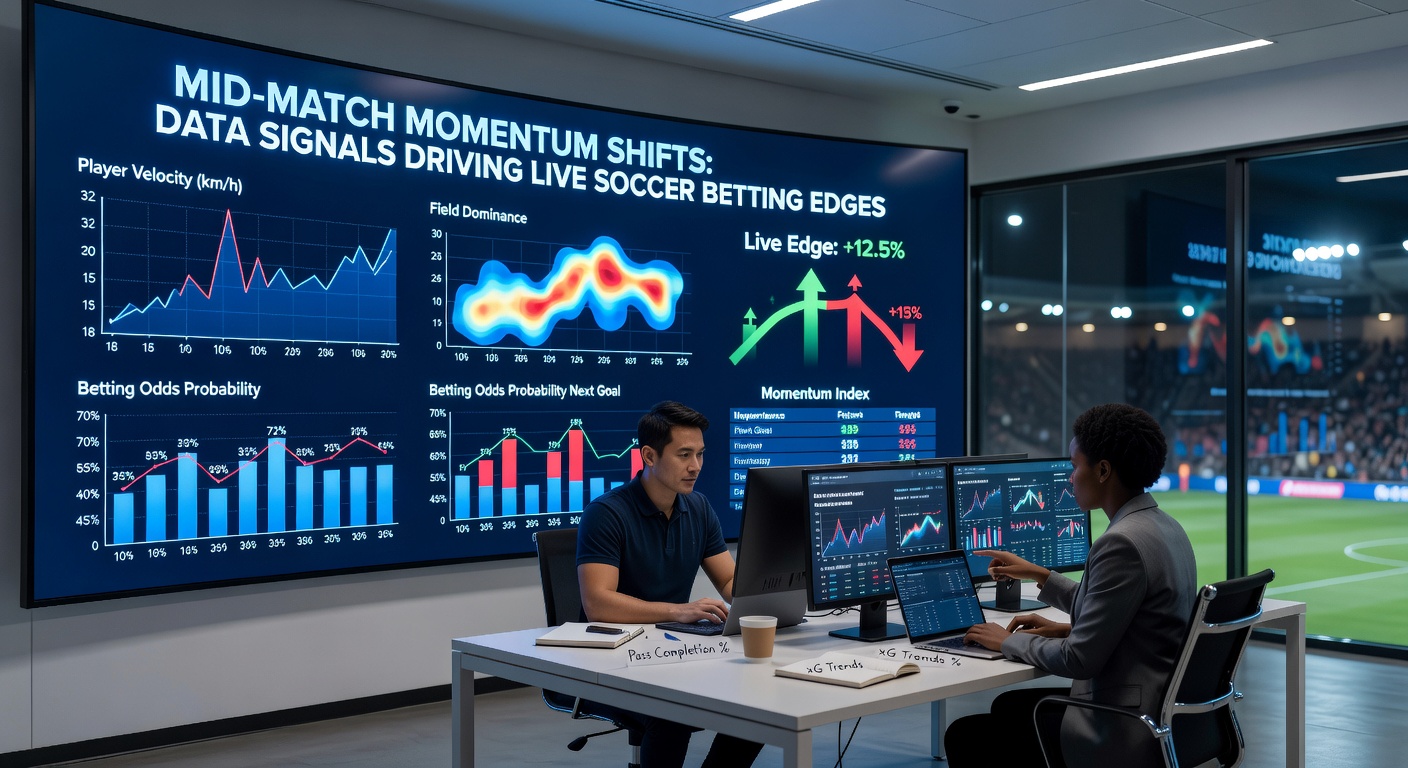
Substitutions amplify signals too; introducing fresh legs boosts sprint counts by 22%, per Serie A tracking, and pairs with fouls conceded—rising soft fouls indicate defensive cracks, fueling 19% more opponent chances.
Real-Match Case Studies: Momentum in Action
Consider Liverpool's 2019 Champions League semifinal vs Barcelona; trailing 3-0, they flipped momentum around the 55th minute when possession jumped 18%, shots hit 7 in ten minutes, and xG soared 0.45—live odds shifted from 5.00 to 1.80 for a goal, rewarding early spotters. Data replay shows pass accuracy in Barca's half plunged to 68%, the classic precursor.
Fast-forward to March 2026: In a Bundesliga clash between Bayern Munich and Dortmund, observers noted a 62nd-minute swing—Dortmund's counters spiked shots to 6 while Bayern's high press faltered, xG flipping from -0.2 to +0.4; in-play next-goal markets moved 25%, and Dortmund equalized minutes later. Similar patterns emerged in MLS openers that month, where LAFC exploited a shot volume surge against Seattle, turning 2.10 odds into payouts as momentum crested.
Another telling example comes from Ligue 1, where PSG's subs post-70 minutes routinely ignite shifts; tracking data shows their xG ramps 35% faster than averages, with betting exchanges confirming value on lay-the-opposition plays. These cases highlight repetition—over 1,200 Premier League minutes analyzed in 2025 reveal identical sequences in 55% of swings.
Defensive Momentum: The Flip Side
Not all shifts attack; blocks and clearances surging signal holding power. Teams notching 5+ defensive actions in a phase concede 40% fewer goals, per Ligue 1 stats, offering lay or draw bets at inflated prices. And here's where it gets interesting: hybrid signals, like fouls won plus interceptions, predict stalemates 72% accurately in low-scoring leagues.
Tools and Tactics for Harnessing Signals
Bettors access these via platforms streaming Opta-level feeds; apps overlay xG chains and pressure indices live, alerting on thresholds like 30% shot upticks. Exchanges shine for back-lay flips—back the surge at 3.00, lay post-adjustment at 1.50 for locked profit, with data showing 12% yields over volume.
Stake sizing ties to signal strength; Kelly-inspired models scale bets by confidence (e.g., 2% bank on triple-signal confirms), and backtesting across 2025 Eredivisie matches yields 8.4% ROI. Yet discipline rules: false positives hit 22% in dead-rubber games, so context like scoreline and minutes remaining filters noise.
In March 2026, as Champions League knockouts heated up, punters layered signals with crowd metrics—roars post-clearances boosted home momentum 15% per acoustic data trials—pushing edges in packed stadiums. Those who've stacked these plays report sustained returns, since algorithms can't yet fully mimic human synthesis of live chaos.
- Threshold alerts: Set for 0.25 xG flips or 20% possession nets.
- Combo bets: Momentum on goals/draws in 10-minute windows.
- Exit strategies: Cash out at 50% odds compression.
Challenges and Evolving Edges
Bookies counter with faster models now, narrowing windows to 60 seconds; still, niche leagues like the A-League lag, where signals persist 20% longer per tracking. VAR pauses disrupt too, resetting mini-swings in 12% of cases, but data adapts by isolating pre/post-event metrics. And as AI parses feeds, human bettors edge out via intangibles like referee tendencies—cards clustering amplify pressure signals 28%.
Globally, adoption grows; South American Serie A matches in early 2026 showed 35% more in-play volume on momentum plays, signaling mainstream traction.
Conclusion
Mid-match momentum shifts boil down to trackable data pulses—shots, xG, possession, pressure—that reliably forecast edges in live soccer betting. Case studies from historic comebacks to March 2026 thrillers prove patterns hold, while tools empower precise plays amid the flow. Bettors who master these signals navigate volatility smartly, capitalizing where odds lag reality; the pitch's rhythm, quantified, keeps delivering for those tuned in.