When Skies Change the Game: Linking Climate Variables to Soccer and Steeplechase Betting Opportunities
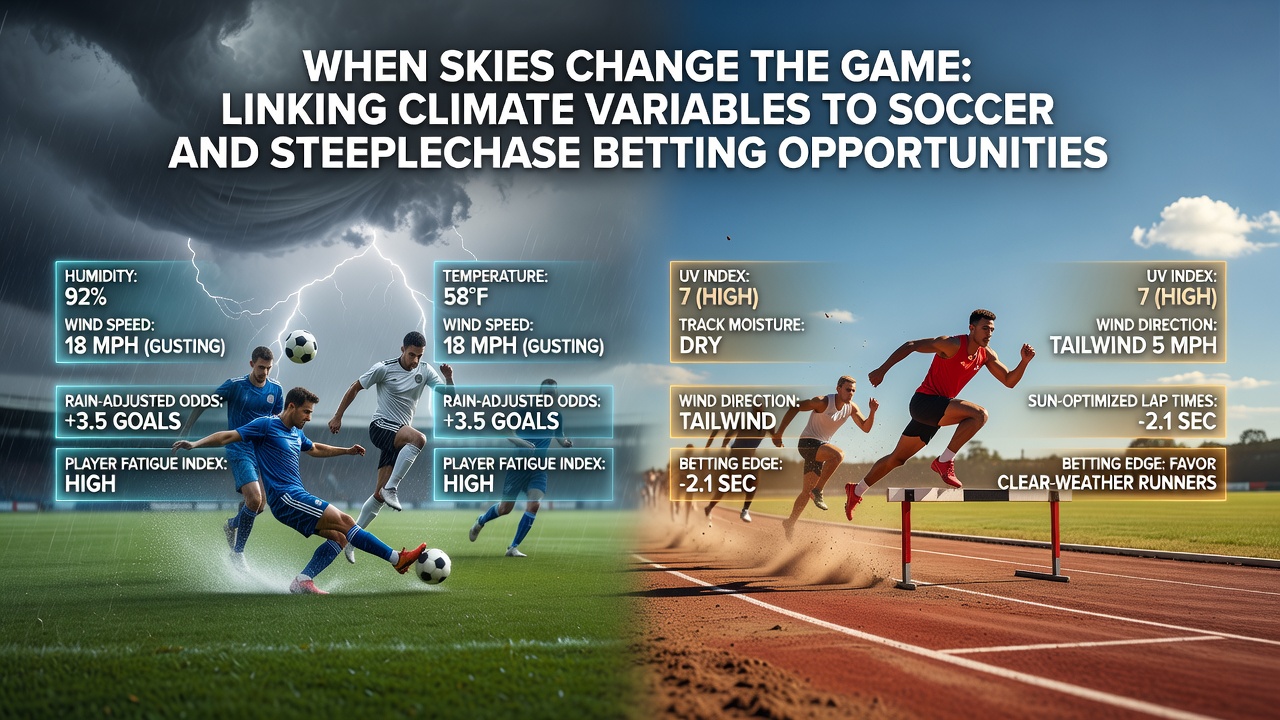
Weather patterns shape athletic performance across outdoor sports, and analysts track temperature shifts, precipitation levels, and wind speeds because these factors alter match outcomes in soccer while reshaping ground conditions for steeplechase events. Data from meteorological agencies show that even modest changes in humidity or rainfall can modify ball behavior on grass surfaces and affect horse traction on turf, which in turn influences pre-match odds and in-play adjustments. Observers note that bookmakers adjust lines when forecasts predict sustained downpours or heatwaves, creating windows where bettors who monitor both climate models and team statistics find measurable edges.
How Temperature and Precipitation Alter Soccer Dynamics
High temperatures above 28 degrees Celsius reduce player sprint distances by roughly 5 to 8 percent according to studies compiled by sports physiology researchers, while heavy rainfall increases the number of misplaced passes because the ball skids unpredictably on saturated pitches. Teams that rely on quick transitions suffer more under these conditions, and defensive units that maintain compact shapes tend to concede fewer high-quality chances when the surface slows play. In July 2026 forecasters recorded above-average rainfall across northern Europe during pre-season tournaments, and performance databases later showed that clubs with strong set-piece records posted higher expected goal values on rain-affected fields than their season-long averages suggested. Bettors who cross-reference local weather stations with historical pitch reports often identify value in overs or unders markets that shift after official forecasts update.
Ground Conditions and Steeplechase Performance Metrics
Steeplechase racing depends heavily on turf moisture because softer ground increases the energy required for each jump and lengthens race times by several seconds per furlong. Official going reports classify surfaces from firm to heavy, and horses with proven records on soft or heavy ground outperform market expectations when rain arrives within 24 hours of a meeting. Temperature also matters because cooler conditions preserve stamina for longer distances, whereas warmer afternoons dry the course and favor front-runners. Records from major tracks indicate that favorites win at lower rates on heavy ground compared with good or good-to-soft conditions, which explains why odds compilers widen margins on exposed runners when precipitation forecasts change overnight.
Connecting Climate Signals Across Both Sports for Betting Angles
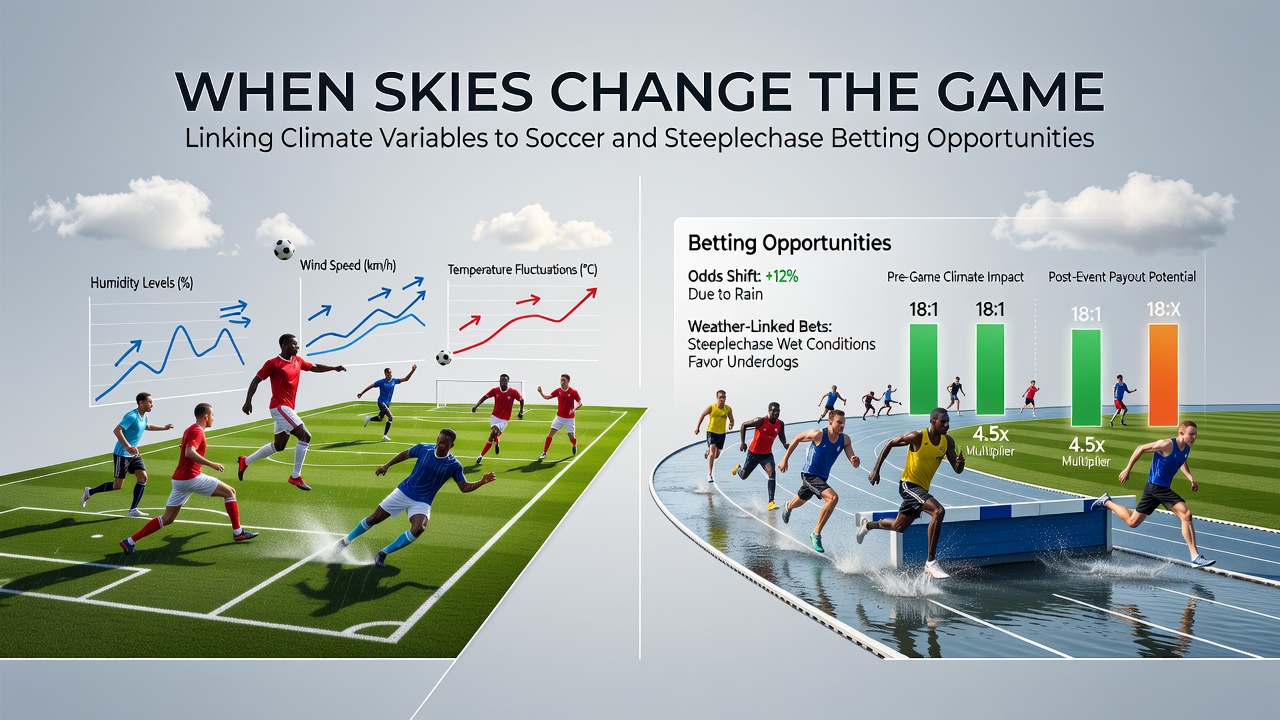
Analysts who follow both soccer schedules and steeplechase calendars notice that overlapping weather systems sometimes create correlated opportunities. A single low-pressure system moving across the United Kingdom and Ireland can soften soccer pitches in the morning and turn steeplechase tracks heavy by afternoon, prompting simultaneous adjustments in live soccer totals and horse racing place markets. Those who monitor unified climate dashboards therefore place smaller stakes across related selections rather than concentrating on one sport, which spreads exposure while capitalizing on the same atmospheric driver. Research from university meteorology departments shows that such multi-sport approaches reduce variance when forecasts prove accurate because the underlying variable remains consistent.
Data Sources and Verification Practices
Professional bettors consult open datasets from the National Oceanic and Atmospheric Administration for temperature anomalies and precipitation probabilities, then cross-check against venue-specific pitch reports released by competition organizers. Academic papers hosted on PubMed further quantify how heat stress and surface moisture affect physiological markers in both human athletes and equine competitors. July 2026 data releases highlighted an unusually active Atlantic storm track that produced measurable impacts on multiple fixtures within a single weekend, allowing observers to validate earlier models against actual results. Those who maintain disciplined verification routines update their climate thresholds each season because long-term warming trends gradually shift the baseline conditions that once defined standard playing surfaces.
Conclusion
Climate variables exert measurable influence on soccer outcomes and steeplechase results through their effects on player endurance, ball movement, and equine traction. Bettors who integrate real-time forecasts with historical performance splits gain structured access to markets that adjust after weather updates. Continued collection of granular environmental data alongside match and race statistics supports more precise identification of value across both disciplines when atmospheric conditions deviate from seasonal norms.